
|
|
November 13, 2026
|

Hello Friends,
The clocks fell back again, and I still feel shocked that it's pitch black outside by 5:00pm. Every single year. Right along with the time change, every lamp in my house ends up blazing by four o'clock, because suddenly we need light for a lot more hours than we did back in September.
I finally looked at what was actually screwed into those lamps and found a mix of old incandescent and halogen bulbs I had been too lazy to replace, some of them probably older than my phone. Turns out those bulbs waste a shocking amount of electricity. LEDs use up to 80% less energy for the same amount of light, according to the Department of Energy. I had no idea the gap was that big.
I swapped the eight bulbs I actually use most, my living room lamps, the kitchen fixture, and the porch light, and figure that alone could save me close to $75 this year just from running those same hours. Took about ten minutes total, and now when it gets dark at five thirty I don't even flinch.
Be Well,
Anisa
Please add anisa@gophercentral.com to your address book or visit here.
|
|
Why Swapping To LED Bulbs Matters
|

|
|
Photo: A quick bulb swap takes minutes and can quietly shrink your electric bill for the rest of the dark winter months.
|
|
When the clocks fall back, most of us are suddenly running lamps, overhead lights, and porch fixtures for several extra hours every single week, and that keeps up all the way through winter. If those fixtures are still holding old incandescent or halogen bulbs, you are paying for a lot of wasted heat, not light, every time you flip a switch. It is an invisible cost that never shows up until the bill lands.
The fix does not require replacing every bulb in the house tonight. Swapping just the handful of bulbs that run the longest hours, the ones in your most-used lamps and fixtures, is where almost all the actual savings live.
|
How To Do It
|
|
1. Start with your most-used fixtures.
The lamp you read by every night, the kitchen light, and the porch fixture that's now on for hours longer than it was last month are your biggest wins. Leave the hallway closet bulb for later.
2. Check the base and shape before you buy.
Snap a quick photo of the old bulb or bring it with you so you grab the right fit the first time instead of making a return trip.
3. Shop by lumens, not watts.
Watts measure energy used, not brightness. Match the lumen number on the old box, or aim for roughly 800 lumens to replace a standard 60-watt bulb.
4. Grab dimmable-rated bulbs for any dimmer switch.
A regular LED can flicker or buzz on a dimmer, the package will say clearly if it's rated for one.
5. Pick your color temperature on purpose.
Warm white, around 2700K, feels closest to an old-school bulb, while daylight, around 5000K, is crisper and better for kitchens and workspaces than bedrooms.
6. Swap them in and get rid of the old ones right away.
Don't let the old bulbs sit in a drawer "just in case," you'll never go back once you see the difference.
7. Note your next bill as a baseline.
You won't feel ten minutes of effort, but you will notice the number next month.
|
|
Today's Thrifty Find
|
|
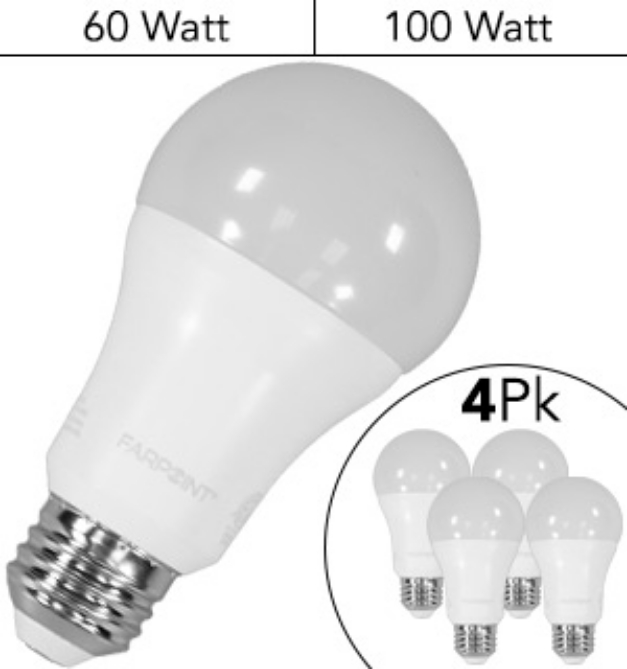
4-Pack of Dimmable LED Light Bulbs
$7.99
$14.99
A 4-pack of dimmable LED bulbs, perfect for the lamps and fixtures you'll be running longest now that it gets dark early. Knock out several at once, skip the extra trips.
|
|
|
|
|
It's a Small Swap With Big Savings
|
|
Most homes still have twenty or more old-style bulbs tucked into lamps and fixtures nobody thinks twice about. Swapping even the handful that run the longest hours each day, especially now that the clocks have pushed darkness earlier, can add up to real money over a winter, often $50 to $100, on top of bulbs that simply last years longer before you have to think about them again.
That's what living thrifty means to me, not some huge overhaul, just swapping out the small things that have quietly been costing more than they should.
|
|
Got a tip of your own? Reply back to me, I love reading your tips and ideas!
|
|