September 28, 2026
TSA Is Rolling Out New Scanners, Here’s What Travelers Need to Know
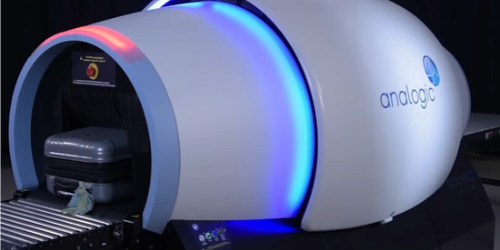
Going through airport security is rarely anyone’s favorite part of traveling. Between taking items out of your bag, waiting in long lines, and making sure you did not accidentally leave something in your pocket, the process can be stressful. However, the Transportation Security Administration, better known as TSA, is continuing to introduce new scanning technology that could make airport security more efficient and easier for travelers.
TSA has been rolling out newer computed tomography, or CT, scanners at airport security checkpoints. These scanners are much more advanced than the traditional X-ray machines that many travelers are used to seeing. Instead of producing only a basic two-dimensional image of what is inside a carry-on bag, CT scanners can create a detailed three-dimensional image. TSA officers can rotate the image and examine a bag from different angles without immediately needing to open it.
One of the biggest benefits for travelers is convenience. At checkpoints equipped with the newer technology, passengers may be able to leave certain electronics and approved liquids inside their carry-on bags. Anyone who has traveled with a laptop knows the routine of pulling it out, placing it in a separate bin, and then trying to reorganize everything after getting through security. Newer scanners can reduce some of that hassle because officers have a clearer view of what is inside the bag.

The technology is also designed to improve security. A more detailed image can help TSA officers identify items that may require additional inspection. The system can help detect potential threats while giving officers more information about objects inside luggage. This could mean fewer situations where a bag needs to be manually searched simply because an item was difficult to identify on a traditional X-ray image.
Of course, travelers should not assume that every airport will have the same equipment. TSA has been introducing new technology across airports over time, so procedures can still vary depending on the airport and security lane. One checkpoint may allow you to keep your laptop in your bag, while another may still require you to remove it. The safest approach is to listen to the instructions given by TSA officers before placing your belongings on the conveyor belt.
New scanning technology does not necessarily mean airport security lines will suddenly disappear either. Wait times depend on many factors, including how busy an airport is, staffing levels, the number of security lanes available, and how prepared passengers are when they reach the checkpoint. Still, technology that allows officers to examine bags more efficiently could help make the overall screening process smoother.
For travelers, the best part may simply be having fewer things to unpack and repack. Airport security will probably never be the most exciting part of a vacation, but making the process easier is certainly welcome. As TSA continues introducing advanced scanners, the airport security experience could gradually become faster, simpler, and more convenient, while still keeping safety at the center of the process.
Until next time -
Jeanie @ Gopher Update